Your dog stops listening when arousal pushes it past its threshold, the point we call the red line. Below the line, your dog can think, learn and respond. Above it, cues stop getting through and the lesson you want does not land. The skill is spotting the approach to the line and adding distance before your dog crosses it.
Owners often tell us the same thing: “He does it perfectly at home.” A perfect sit in the kitchen, a perfect recall in the hallway, then nothing on the street. The training is still there. It is locked behind a door that closes when arousal climbs too high.
What is the red line in dog training?

It is the point where arousal outruns your dog’s ability to cope, and the brain switches from thinking to reacting. Arousal is not misbehaviour. It is activation: excitement, worry, frustration and fear all turn the same dial. A little is useful. A dog with none is asleep.
The trouble starts when the dial crosses the line: heart rate up, muscles loaded, all attention on the trigger. From outside you see a dog that “suddenly” cannot sit, cannot come, cannot even take a piece of chicken.
“Suddenly” is the wrong word. A dog rarely jumps the line in one leap. It climbs towards it, visibly, and the climb is where your influence lives.
Why does my dog listen at home but not outside?
Because home sits far below the line and the street does not. At home nothing is new, so your cue competes with nothing. Outside, your dog starts the walk already keyed up (the lead itself predicts excitement), and every smell, scooter, cat and dog adds a notch.
The cue that works in a quiet kitchen now reaches a brain already busy with the street. Past the line, that cue does not get through at all. That is why “he knows it, he is just being stubborn” gets the problem backwards.
Knowledge is not the problem. Access to it is. A dog over the line is not refusing you. It is unavailable, the way you cannot remember a phone number halfway through a sprint.
What does crossing the line look like?
It shows as small physical changes, and food is a good witness. Under the line, your dog takes treats with a soft mouth and sniffs the ground. As the line gets closer, the mouth hardens, the body stiffens, the weight shifts forward or back, and the sniffing stops.

Then the lead goes tight. Over the line you get the display: barking, lunging, spinning, or a flat, frozen stare. The table sets the two states side by side.
| Signal | Under the line | Over the line |
|---|---|---|
| Taking treats | Takes treats gently, can chew | Ignores or snatches without registering |
| Body | Loose, curved, weight balanced | Stiff, tall or low, leaning in or away |
| Eyes and ears | Soft scanning, easy check-ins | Hard stare, ears pointed at the trigger |
| Response to cues | Responds on the first quiet ask | Seems deaf, even to its own name |
| Lead | Mostly soft, small corrections self-resolve | Tight and loaded, pulling that ignores discomfort |
What pushes a dog over the line?
Rarely one big thing, usually several small things stacked. Arousal from one trigger takes a while to drain away. A dog that meets a scooter and then a dog across the road meets the third trigger, a dog head-on, already close to the line. That is trigger stacking, and Fig. 01 shows it on one walk.
- Scooter
- Dog across the road
- Dog head-on: over the line
- The red line
- Baseline, the level the walk started at
- Incomplete recovery, the dips stop short of it
Slower loads stack too: poor sleep, too little rest, pain, heat, adolescence and a route lined with triggers. A dog that seems to explode out of nowhere has often been loading up for days. We cover this in how much exercise a reactive dog needs, because more exercise is an easy way to stack a dog by accident.
How do I keep my dog under the line?
Choose walks your dog can win, and treat distance as your main tool: it is the one you always have, and it works before any cue does. In practice that means crossing the road, turning away early or stepping behind a parked car.

- Route beats technique. A quiet route with ways out does more than any command on a street lined with triggers.
- Watch the mouth, not the clock. The moment your dog starts taking food roughly, add distance. You are near the line.
- Let the nose work. Sniffing helps a dog bring its own arousal down, so a walk read with the nose drains rather than loads.
- Give recovery time. After a hard moment, allow minutes of easy distance before the next trigger, not seconds.
- Stop while it is going well. Ending while your dog is still succeeding is how the line moves.
None of this needs a perfect dog. It needs a route with ways out, room to back off, and an owner who notices the mouth before the lead goes tight.
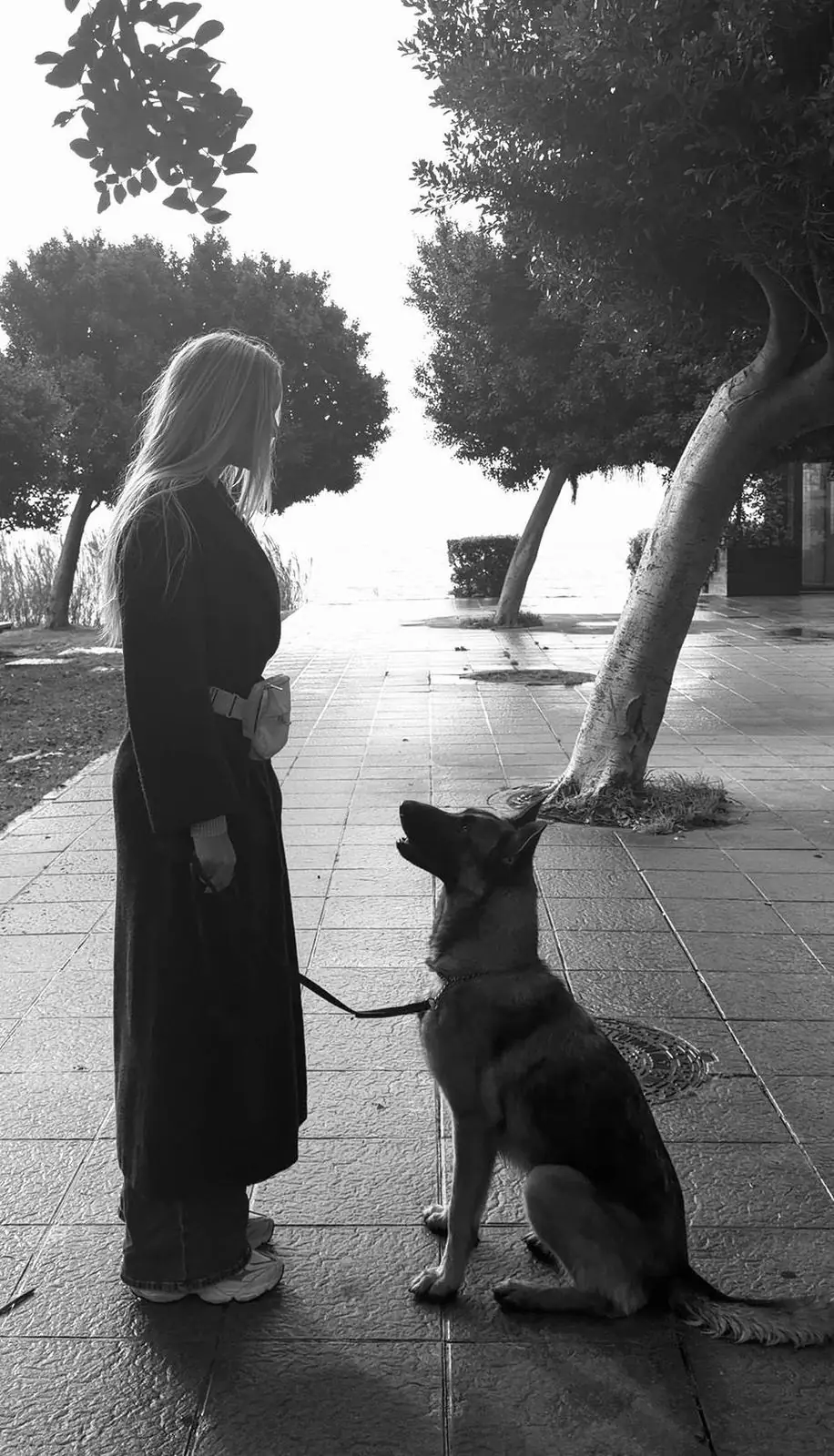
Distance is half of it. Your own calm is the other half: a tight lead carries your nerves straight down to your dog, which is why the Locus CODE™ works with the human end of the lead.
If you would rather practise with a trainer beside you, private sessions can take this work onto real streets.
What should I do when my dog is over the line?
Manage, do not train. Add distance, keep your body quiet and get out with as little fuss as you can. Repeating a cue louder at that moment will not get through. Let your dog’s system come down before you ask for anything again.
Above the line there is no training, only a calm exit.
The training happens before the next crossing, at a distance where your dog can still think. We explain why the lesson you want does not land mid-reaction in a separate note. Stop trying to win the explosion and work on winning the approach.
If your dog has bitten, or turns on the lead or on you when it is over the line, do not work through this alone. Start with private training, and read how to tell reactivity from aggression.